
Violations
Open HPD violations by class, with Class C flagged separately. HPD regulates housing, so a non-residential building legitimately shows none.
Type any New York City address and get a report card: housing violations, tenant complaints, tax assessment history, the owner of record, and the schools that serve it.
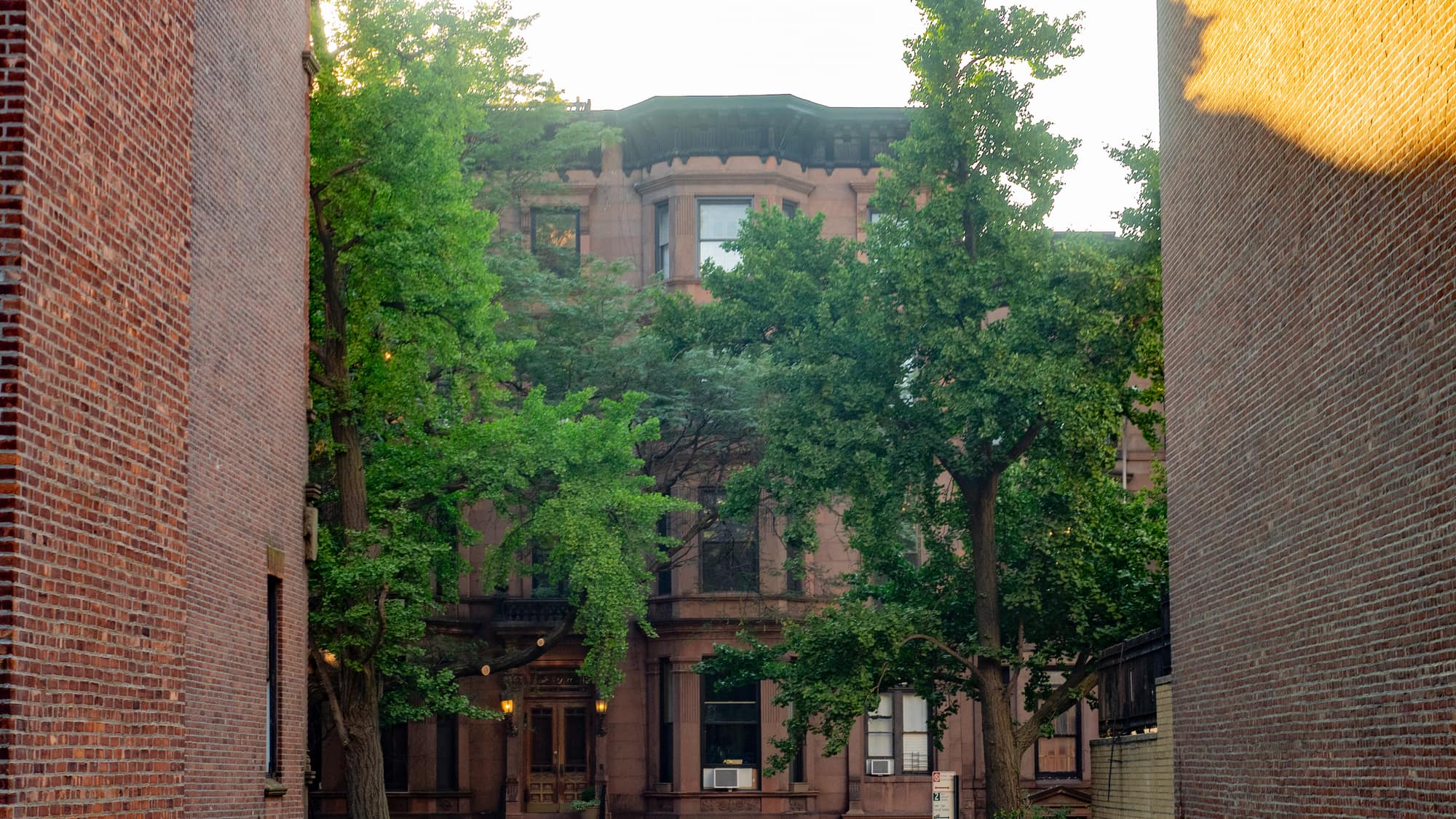
See a sample report card A Brooklyn walk-up with 121 open violations.
Photo: Ajay Suresh, cropped — CC BY 2.0
Landlords are not required to hand you a violation record, and a good listing photo tells you nothing about the pipes. All of it is public — it is just spread across six city datasets that were never meant to be read together.
Six sections, every one from free public records, in a single page.
Open HPD violations by class, with Class C flagged separately. HPD regulates housing, so a non-residential building legitimately shows none.
Recent tenant complaints against the building, newest first.
Assessed value over the years beside DOF’s own market estimate — never presented as a sale price.
Owner of record, managing agent, and the contacts the city has on file.
Year built, unit counts and building class, from PLUTO.
The elementary and middle schools that cover the address, with ELA and Math figures. Numbers only.
Read the building’s record before you sign a lease.
Check the address now, and again the week you move in.
Diligence on a co-op, condo or small building before you commit.
Look up conditions and owners fast, with every figure cited.
NYC Geoclient converts it into the borough-block-lot id every city dataset is keyed by.
Violations, complaints, valuation, ownership, building facts and school zones, straight from NYC Open Data.
Cited, printable, and cached so the same building opens instantly next time.
Open housing violations and whether any are Class C (immediately hazardous), recent tenant complaints, the Department of Finance assessed-value history, who is registered as the owner and managing agent, and the elementary and middle schools zoned for the address.
NYC Open Data — HPD for violations, complaints and registrations, DOF for property valuation, DCP/PLUTO for building facts, and NYC DOE for school zones and state test results. Addresses are converted to a BBL with NYC Geoclient.
No. Assessed value is the figure the city taxes against. DOF also publishes its own market estimate, shown separately. Neither is a sale price or an appraisal, and the two are never combined.
No, because NYC high schools are mostly choice-based rather than zoned. Zoning applies to elementary and middle schools, which is what the schools section reports.
Yes. Every report has a “Download report card (PDF)” button that uses your browser’s print dialog, and the data itself is available as JSON from /api/report/{BBL}.json.
Yes. Every source dataset is free and public. There is no account and no payment.
Each building report is assembled live from the city datasets and then cached for 7 days. Source datasets themselves update on their own schedules.
The data is available as JSON so assistants and tools can read it directly:
/api/lookup?address=… resolves an address to a BBL, and
/api/report/{BBL}.json returns the full report. See
llms.txt for a machine-readable summary of this site.